

Healthcare mobile app development for iOS and Android
iOS and Android apps people open every day, including patients who are older, unwell or not confident with technology.
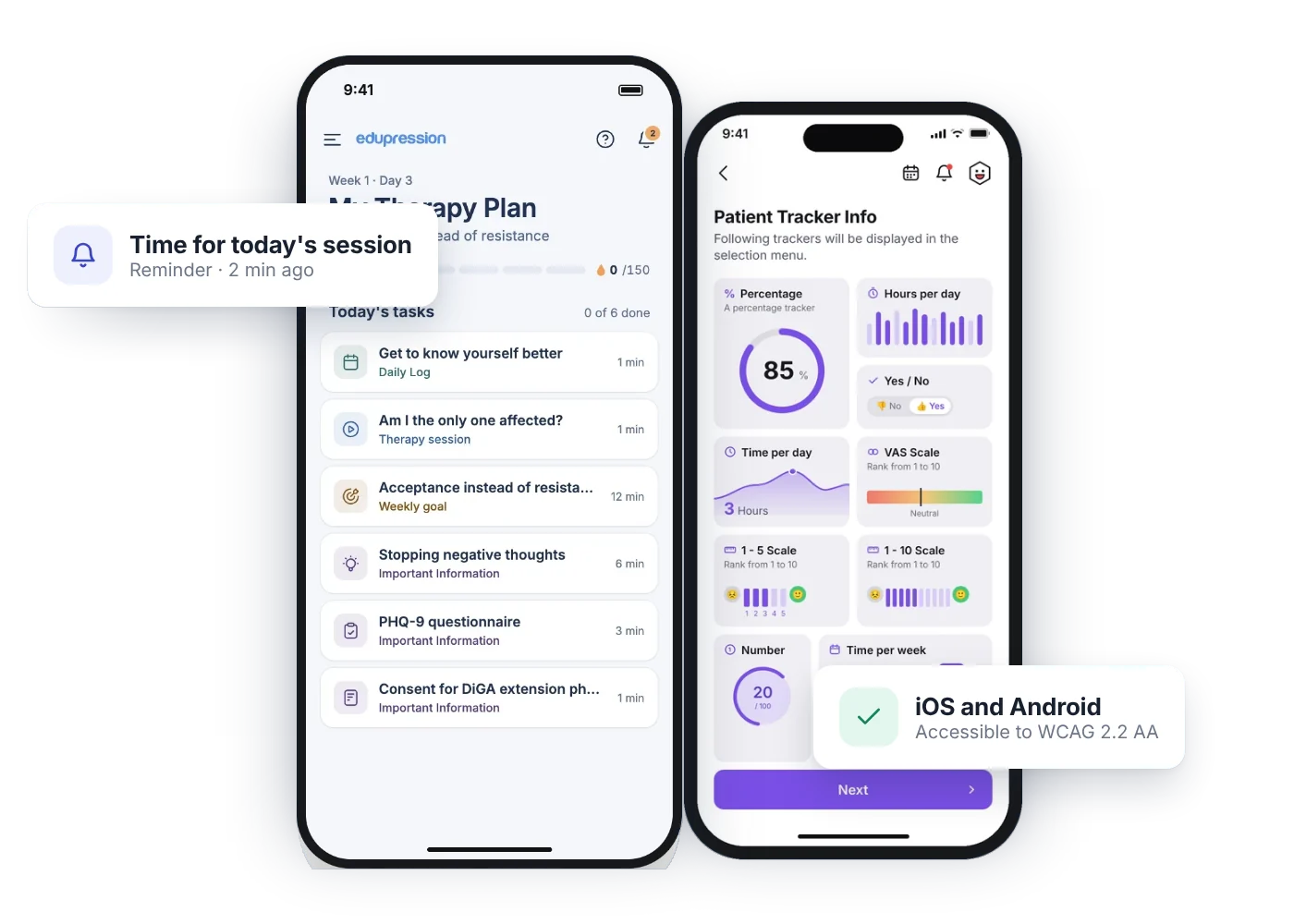
What makes healthcare mobile app development different?
Healthcare apps hold sensitive data and are used by people who are often unwell, older or short of energy. That changes the work: secure storage and sign-in to standards such as BSI TR-03161 part 1, consent-aware analytics, offline use, accessible design with large touch targets, and evidence that the app is safe to use.
- Reply within two working days
- NDA available before you share details
What's included and what you get
What's included
- Native or cross-platform development
- Secure storage and authentication
- Wearable and device integration
- App store submission
What you get
- Published iOS and Android apps
- Security design ready for BSI TR-03161
- Analytics that respect consent
- A release and update process
How is mobile app development priced?
Most apps start with fixed-price discovery and an MVP for one or both platforms, then move to a monthly dedicated team as the app grows. The cost depends on native or cross-platform delivery, device integrations, offline needs and the security level required. You get a written estimate before work starts.
- Fixed scopePrice agreed before work starts
- Dedicated teamMonthly, per team member
- SupportMonthly retainer, agreed response times

Edupression: an approved DiGA for depression
A CE-marked therapy app we designed and built, secured to BSI TR-03161 and listed in the DiGA directory.
Our process and what you get
Discovery
Users, platforms and the rules that apply.
Prototype
Tested with patients on real phones.
Build
Sprints with secure storage and sign-in.
Store release
Privacy labels and store review.
Updates
OS updates, patches and new features.
Mobile app development questions
Should we build native or cross-platform?
Native Swift and Kotlin where performance, device features or security demand it; React Native or Flutter where one codebase saves time. We recommend one in discovery and explain why.
Can the app connect to wearables?
Yes. We integrate wearables and connected devices through Apple HealthKit, Android Health Connect and device vendors' SDKs, with consent built into the flow.
Do you handle App Store and Google Play submission?
Yes, including the privacy labels, data safety forms and health-related questions both stores ask during review.
How do you secure patient data on the phone?
We minimise what is stored on the device, encrypt what remains, use platform secure storage and strong sign-in, and test against BSI TR-03161 part 1 for DiGA apps.
Can you build a DiGA app?
Yes. Edupression, an approved DiGA used by 10,000 patients, is a mobile therapy app we designed and built.
Do you support the app after launch?
Yes. Operating system updates, security patches and new features continue under a support plan or a dedicated team.
Related services and guides
Web platform development
Patient portals, clinician dashboards, admin tools and internal systems, built to be fast, accessible and secure from the start.
See the serviceMVP development
A focused first version that proves the idea to users, investors or a clinical partner, built on secure foundations you will not have to throw away.
See the serviceAI and data integration
Put the data you already hold to work: interoperability, evidence pipelines and AI features that are explainable and safe to ship.
See the serviceBSI TR-03161 explained
The German security guideline for health apps, in plain language.
Read the guideTalk to an engineer about mobile app development
Tell us where your product is today. We will suggest the smallest useful next step.
NDA available before you share details